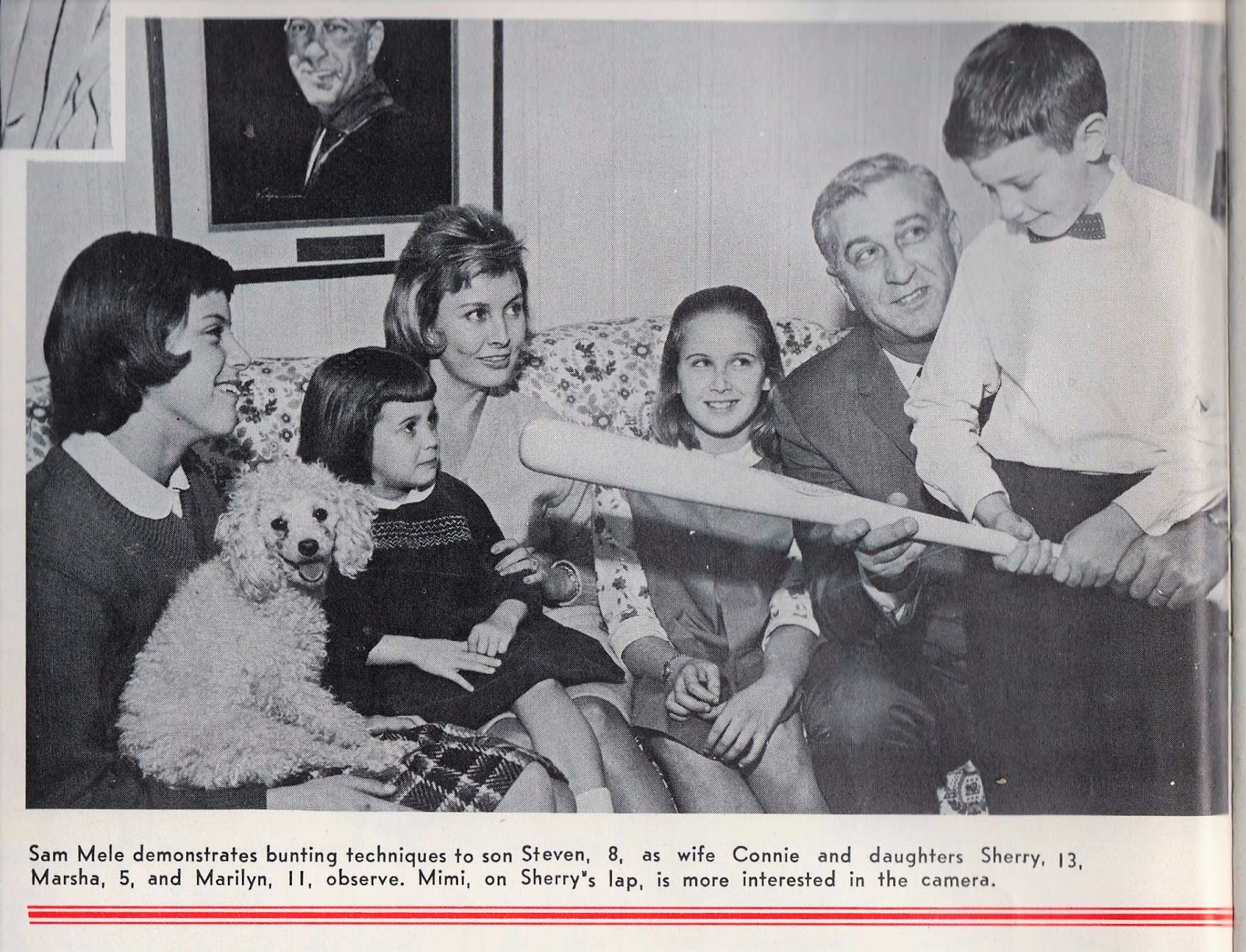
By sheer coincidence, the Twins 1962 Camera Day landed on the very day (8/26/62,
BBref Box) the franchise's
first Minnesota no-hitter (post link!) was pitched, by
Jack Kralick. Through the goodness of Twin Cities blogger Michael Haas (
@digitalHaas,
Alright Hamilton!), we have this beautiful set of photos from that historic day. They were shot by his grandfather, who attended the game that day along with Michael's mother and grandmother. We also get a sampling of Michael's thoughts at the end of this post, lending context to the photos.
1962 Twins team members
Jim Kaat,
Zoilo Versalles,
Vic Power,
Don Mincher,
Dick Stigman,
Ruben Gomez,
Rich Rollins,
Johnny Goryl,
Hal Naragon,
Marty Martinez, Coach
Floyd Baker, and Manager
Sam Mele are all present in this collection.
What is so great to me is how relatively shiny and new
Metropolitan Stadium was - it was only in it's seventh season of existence, and its second as home to the Twins. The right field view is beautiful, encompassing the scoreboard, crowd, and bullpen areas. Especially nice is the Rollins / Valdivielso photo, with the first base foul territory and upper deck mezzanine in the background.
[ NOTE: HELPS TO SINGLE CLICK PHOTO, ENLARGE FOR DETAIL! ]
My first inclination before posting these photos was to couple them with archival newspaper reports of the famous game by Kralick. After some thought, however, I felt they deserved a post of their own. A separate blog entry will follow this week, concentrating on the original "Black Jack's" efforts.
[below: player with
Rich Rollins (R) is
Ruben Gomez, and
not Jose Valdivielso as noted. To correct)
Ironically,
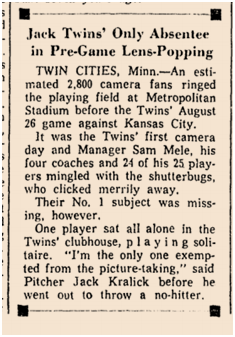
Jack Kralick was nowhere to be found on the field for interested fans.
The Sporting News Sept. 8, 1962 edition gave this explanation (see
PDF of TSN page for extra context from that game) :
My Questions For Michael Haas: Behind The 1962 Camera Day Photos
ClassicTwins: I've always wanted to know about that blog title: "Alright Hamilton." How did that come about? How would you summarize the blog?
Michael: Oh, it's just a line from the movie "Fast Times At Ridgemont High," uttered by Sean Penn's character. I didn't put much thought into the title, obviously. Actually, we were a pretty legitimate blog in the pre-Twitter days. Myself and a few others tried to document the Twins fan experience and random off-topic things. You can see the archives at alright-hamilton.blogspot.com. The alright-Hamilton.tumbler.com is where I post random media very sporadically. I wish I could get back into the writing daily, but I just lost the momentum. Someday.
ClassicTwins: I get that "momentum" thing. Tell me about the photos, Michael. What’s the history behind them?
Michael: My Aunt digitized these old slides and gave some framed prints to my Mom for Christmas. My Grandpa was likely the photographer. My mom, 12 years old, is visible in the Athletics’ dugout on the left, and that’s my Grandma in the blue dress.
ClassicTwins: Very cool, a piece of family history with your grandparents and mom at the game, the photos literally a snap shot of a small part of their lives at the time. Could you give any information regarding the type of Twins or baseball fans they were – avid, casual, or otherwise? Did they make regular outings during the summers to Met Stadium to see the Twins? Do you know if they had any favorites among the players or coaching staff?

Michael: I would describe my grandparents as casual fans. I don’t remember them having much to say about the Twins while I was growing up in the 90’s. However, they must have been pretty close with the team because my Grandpa worked as an usher at Met Stadium. I’d guess my mom was the big fan of the family. I think she has a Bob Allison autographed picture around somewhere. And I know she still has her ticket stubs from games 1 and 2 of the 1965 World Series she saw as a 15 year old. I have no idea why she didn’t go to 6 and 7.
ClassicTwins: Bob Allison – perhaps the “Mr. Photogenic” of all the Twins ‘60’s guys. Does the photo set give you any particular feelings, i.e. “I wish I could have seen Earl Battey play in person,” or “Did the Twins REALLY have Harmon play left field a lot when they had Vic Power around to play first?” Or anything at all that you wonder about from that period in Twins history?

 Michael: Well, the things that strike me most is the ballpark and the uniforms. I had no idea the Athletics had changed their primary colors to orange and black during their brief stay in Kansas City. It’s also interesting to see the way Metropolitan Stadium evolved over the years as they added seating. What’s most amazing to me is the fan access to the players and the field. Can you imagine what it would be like, as a 12-year-old, to stand on tobacco juice and sunflower seed shells in the dugout with the players? It would be fun to know what was going through their heads.
ClassicTwins: Great observation! I like word-pictures! So, how would you rate yourself as a fan? What was your favorite player growing up as a kid? Or now?
 Michael: I’m a big Twins fan, but I’m a reasonable one. I don’t let their stinky performance affect my mental health, or anything like that. I grew up in the era of the ‘M’ hat and Kirby Puckett. I don’t actually remember either World Series title, but in every picture of me as a kid, I’m wearing a “World Series Champ” hat.
 ClassicTwins Are there any particular games you’ve attended that stand out in memory?
Michael: The best two games in recent memory that I’ve attended were game 163 in 2009 and the Jim Thome walk-off bomb against Thornton and the White Sox in 2010. Every fan remembers those two games.
ClassicTwins: What do you think about Target Field (what a dump, right?)?
Michael: I like Target Field a lot. We’re four years in and it still feels brand new. In fact, I’m still learning about the best views, best seats for the money, and most excellent and secret parking spots. The only thing I dislike about modern stadiums is the separation between seating areas. They put a moat in Target Field to close off the padded seats from the regulars, and they place almost all the memorabilia in exclusive seating areas. But that’s the nature of the modern sports palace - - gotta make sure the corporations feel special.
 ClassicTwins: I have no doubt many Twins fans share that idea! I loved my single visit to the Legends Club area, swanky, but I wish it would be easier to just glide through there, in particular, and see the fantastic museum-like exhibits. Great stuff, Michael! Anything else pertinent you’d like to add about “1962 Camera Day At The Met”?
Michael: That’s really all I got. But it sounds like you’ve done further research on the game and roster than I, so anything you want to add about that era would be really cool. You could just add my twitter handle I guess. Thanks a bunch. I really think the Twins have a cool circle of fans on the internet, and you’re one of them.
ClassicTwins: You show yourself a man of great judgment.
Thanks again, Michael and Win! Twins! (okay, that IS how the song is properly titled!).
***
What a great thing it was, having our Mr. Haas's permission to go ahead with these gems!
As the great Twins announcer finished every broadcast, I also say:
"
So long, everybody!" - Herb Carneal